
Most smartwatches are built for the gym. These ones are built for 100-mile ultramarathons, alpine expeditions, open-water swims, and multi-day wilderness treks. The best ultra and expedition smartwatches in 2026 combine military-grade durability with satellite navigation, multi-week battery life, and training metrics so advanced they were science fiction a decade ago. If you’re serious about endurance sport or adventure, this is your list. We tested the best ultra & expedition smartwatches of 2026 across rugged terrain, extreme temperatures and multi-day adventures to find the
ones truly built for the extreme.
#1. Apple Watch Ultra 2
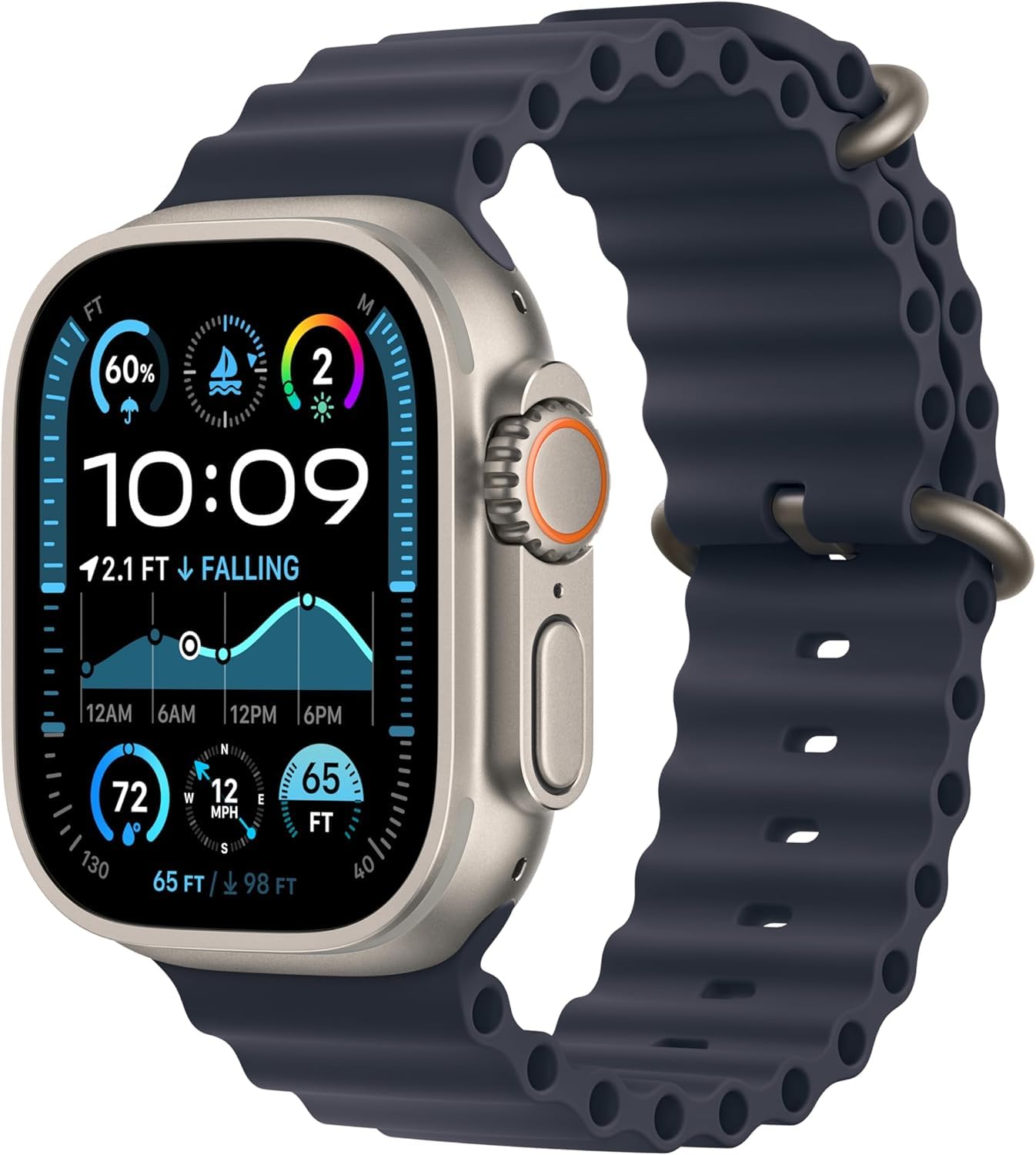
The Apple Watch Ultra 2 is Apple’s most capable watch — built for triathletes, mountaineers, and serious outdoor athletes who need precision GPS, exceptional durability, and a display readable in direct sunlight. Its titanium case, sapphire crystal, and 100m water resistance make it the toughest Apple Watch ever made, while the 60-hour battery in Low Power Mode keeps you going through multi-day events.
Key Specs
- Case: Grade 5 titanium — aerospace grade
- Display: 49mm Always-On Retina, 2,000 nit peak brightness (best outdoors)
- GPS: Dual-frequency L1 + L5 (most accurate GPS available)
- Battery: 36 hours standard; 60 hours Low Power Mode; 72 hours ultramarathon mode
- Water Resistance: 100m — EN13319 diving standard
- Price: $799
Pros & Cons
- ✅ Most accurate GPS of any Apple Watch — L1+L5 dual-frequency
- ✅ 2,000-nit display readable in full alpine sunlight
- ✅ Action Button and programmable for sport-specific use
- ✅ Depth gauge and water temperature sensor for divers
- ✅ Full Apple ecosystem — WatchOS, Apple Pay, emergency SOS via satellite
- ❌ Battery still shorter than dedicated Garmin/COROS expedition watches
- ❌ Requires iPhone — no standalone Android support
- ❌ $799 puts it at the top of the price range
Verdict
The Apple Watch Ultra 2 is the best expedition smartwatch for Apple users who want the full smartwatch experience — payments, notifications, apps — alongside serious athlete credentials. The dual-frequency GPS accuracy and 2,000-nit display are industry benchmarks.
#2. Garmin Fenix 8 Sapphire Solar
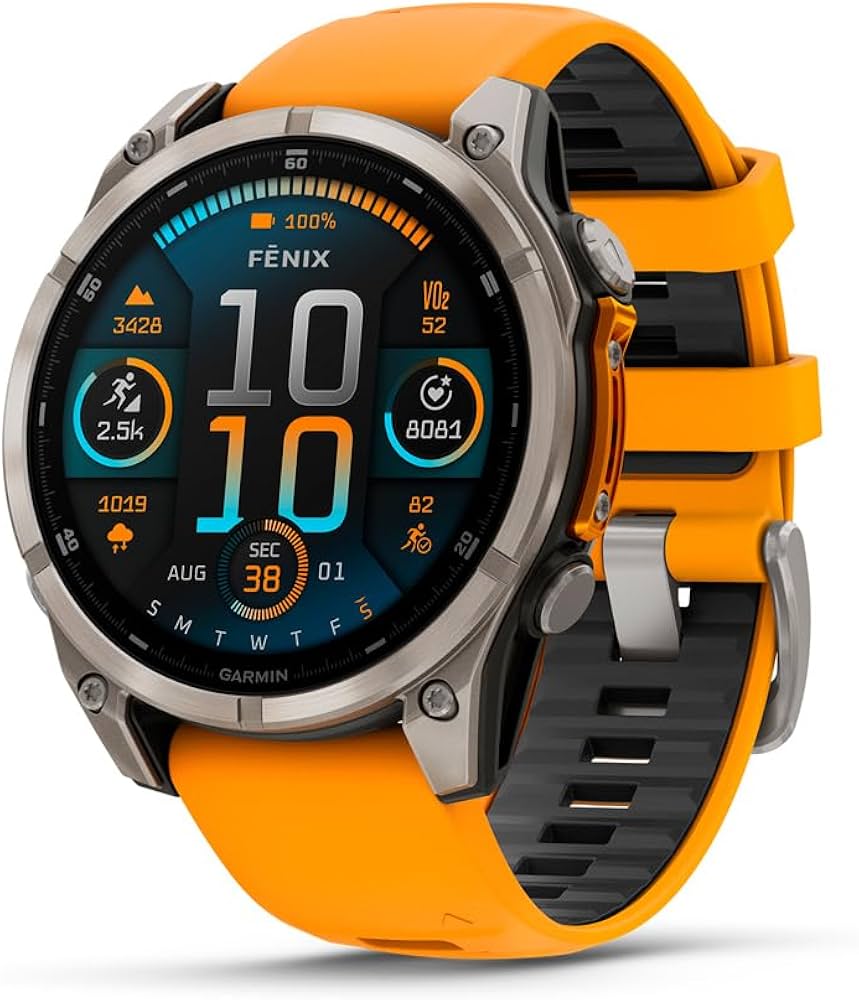
The Garmin Fenix 8 Sapphire Solar is the apex predator of multisport expedition watches. Worn by elite ultramarathon runners, Ironman triathletes, and mountaineers, it offers an unmatched combination of training analytics, solar-assisted battery life that stretches to weeks, and satellite navigation on every major constellation. If you’re comparing any expedition watch to anything, it’s compared to the Fenix.
Key Specs
- Case: 47mm or 51mm titanium with sapphire crystal lens
- Battery: Up to 29 days smartwatch; 90 hours GPS; solar extends all modes
- GPS: Multi-band GPS (all constellations) + Garmin’s SatIQ
- Display: AMOLED (new on Fenix 8) — stunning and readable
- Water Resistance: 10 ATM (100m)
- Price: $999–$1,099 (Sapphire Solar)
Pros & Cons
- ✅ Industry-best training analytics — VO2 Max, Training Load, HRV Status, Race Predictor
- ✅ Solar charging extends battery life in all modes
- ✅ New AMOLED display is a major upgrade over MIP predecessor
- ✅ Built-in flashlight, speaker, and microphone (new on Fenix 8)
- ✅ Works with Android and iOS equally
- ❌ Over $1,000 — significant investment
- ❌ Bulkier than Apple Watch Ultra for everyday wear
- ❌ Smartwatch features (apps, payments) lag behind Apple
Verdict
The Garmin Fenix 8 Sapphire Solar is the benchmark expedition watch for serious endurance athletes. No other watch delivers comparable training depth, solar battery extension, and multi-constellation GPS accuracy. Worth every penny if you train and race at a high level.
#3. COROS VERTIX 2S
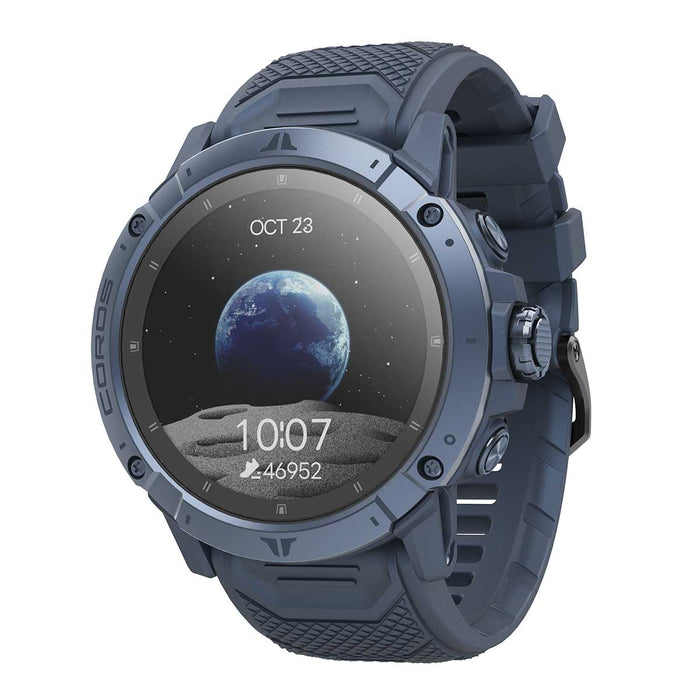
COROS built its reputation by putting serious endurance athletes first — and the VERTIX 2S is their flagship proof. With the longest GPS battery life of any expedition watch at up to 140 hours in full GPS mode, a sapphire crystal display, titanium alloy case, and dual-frequency GPS, it’s designed for athletes who spend days in the field without access to power.
Key Specs
- Case: Titanium alloy with sapphire crystal
- Battery: 60 days smartwatch; 140 hours GPS; 360 hours UltraMax GPS
- GPS: Dual-frequency L1+L5 multi-constellation
- Display: 1.4″ MIP colour display
- Water Resistance: 10 ATM (100m)
- Price: $699 — best value expedition watch
Pros & Cons
- ✅ Best GPS battery life of any expedition watch — 140 hours
- ✅ 60-day smartwatch battery — weeks of use per charge
- ✅ Dual-frequency GPS accuracy rivals Garmin and Apple
- ✅ $300 cheaper than Fenix 8 Sapphire for comparable core features
- ✅ Training analytics excellent for runners and triathletes
- ❌ MIP display less vibrant than AMOLED alternatives
- ❌ Smaller app ecosystem than Garmin Connect or Apple
- ❌ Less refined smartwatch features
Verdict
The COROS VERTIX 2S is the best expedition watch for endurance athletes who prioritise battery life above all else. If you’re doing multi-day ultras, bikepacking expeditions, or mountain adventures, 140 hours of GPS tracking with no recharge needed is a genuine competitive advantage.
#4. Suunto Vertical Titanium Solar
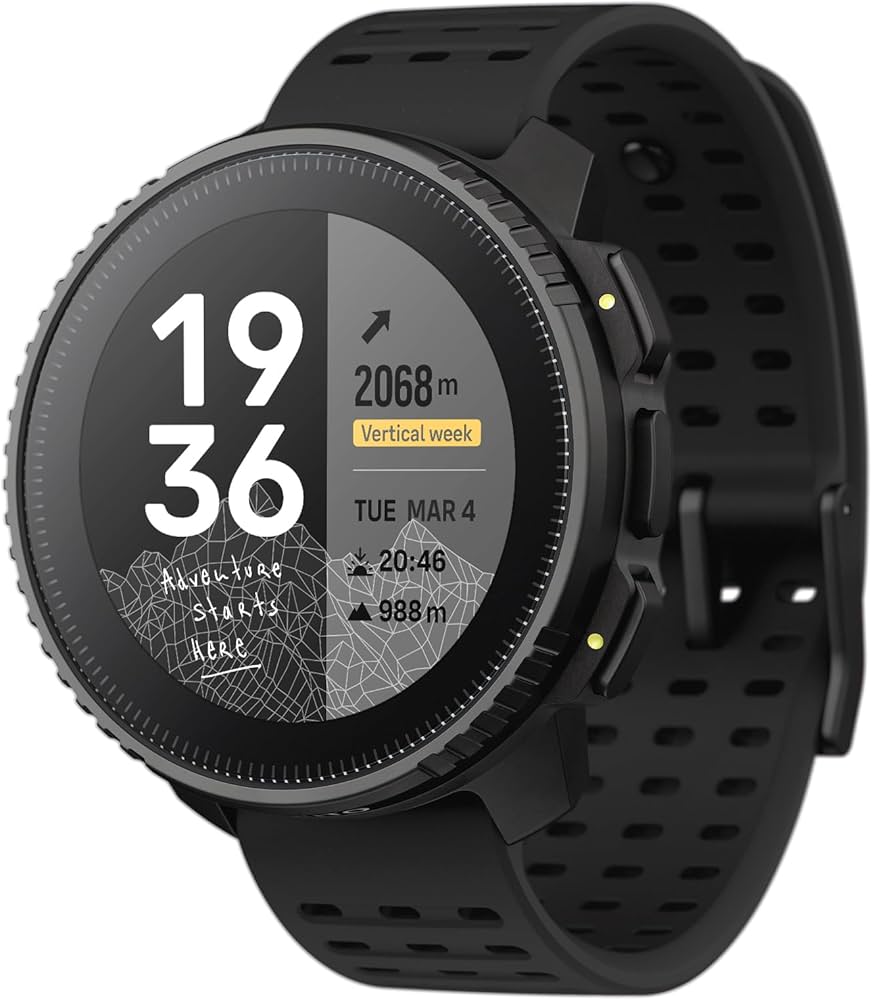
Suunto’s Vertical Titanium Solar is the Finnish brand’s most ambitious watch yet — combining solar charging, a large 1.4″ AMOLED display, and a titanium case in a package designed for trail running, ski mountaineering, and long mountain missions. Suunto’s route navigation and heatmap features are particularly beloved by trail runners and mountain athletes.
Key Specs
- Case: 49mm titanium with solar charging bezel
- Battery: Up to 60 days smartwatch (solar); 85 hours GPS; 260 hours Tour mode
- Display: 1.4″ AMOLED — one of the sharpest on any expedition watch
- GPS: Dual-frequency multi-constellation
- Maps: Offline maps, breadcrumb navigation, route planning
- Price: $749 (Titanium Solar)
Pros & Cons
- ✅ Stunning AMOLED display — best screen of any non-Apple expedition watch
- ✅ Excellent offline route navigation for trail athletes
- ✅ Solar charging genuinely extends battery in outdoor conditions
- ✅ 260-hour Tour mode for extreme multi-day expeditions
- ✅ Clean, elegant design — wears well everyday despite 49mm size
- ❌ Training analytics less deep than Garmin Fenix
- ❌ Suunto app not as polished as Garmin Connect
- ❌ Smaller community and third-party integrations
Verdict
The Suunto Vertical Titanium Solar is the best expedition watch for trail runners and mountain athletes who want the sharpest display with solar-extended battery and superb route navigation. A genuine Fenix alternative for the navigation-focused outdoor athlete.
#5. Polar Grit X2 Pro Titan
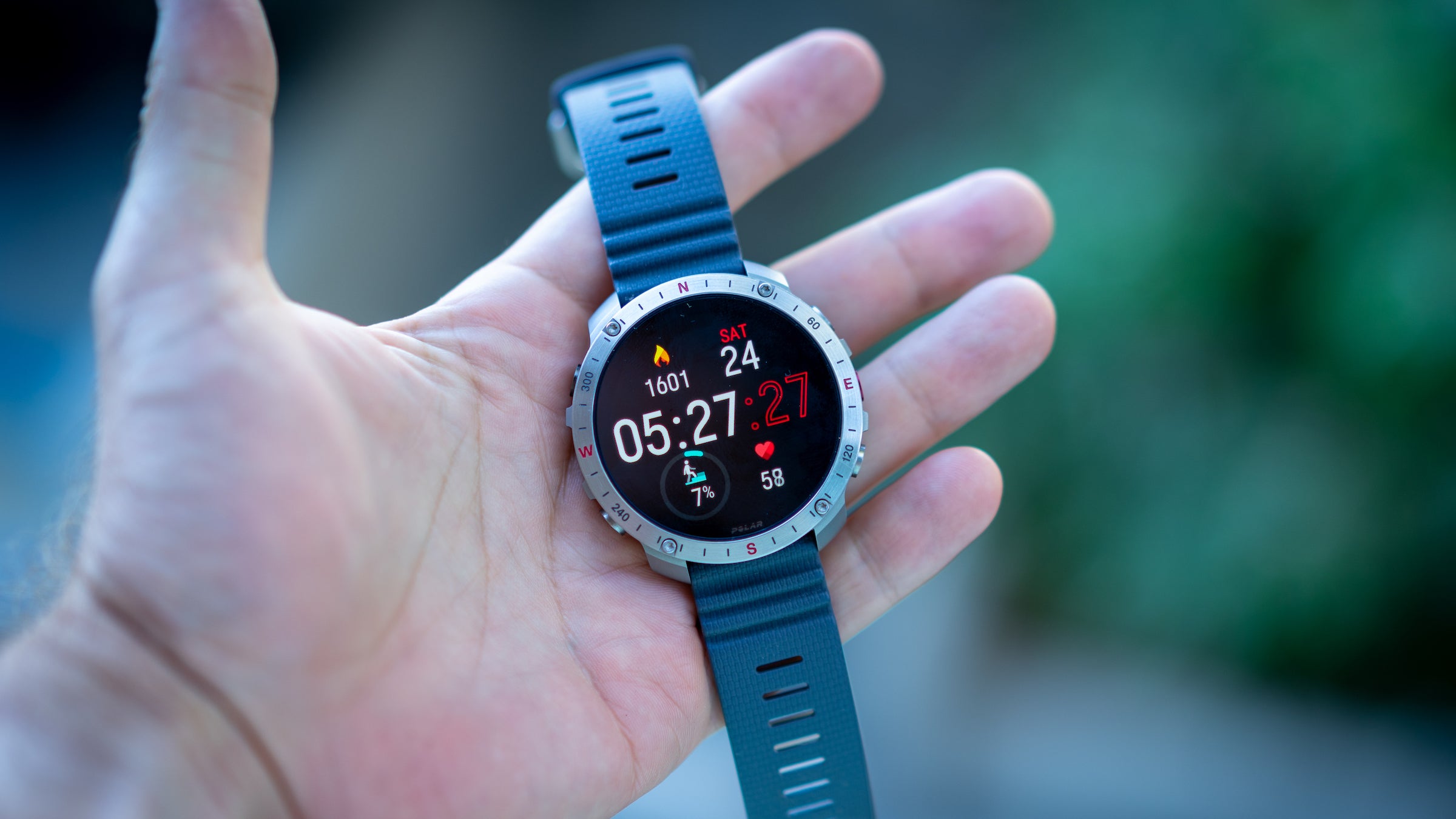
Polar’s Grit X2 Pro Titan is built for serious outdoor athletes who value physiological training data above all else. Polar has the most advanced HRV and recovery science of any watch brand, backed by decades of laboratory research — and the Grit X2 Pro puts that science on your wrist in a durable titanium package with AMOLED display.
Key Specs
- Case: Titanium with sapphire crystal
- Battery: Up to 7 days smartwatch; 43 hours GPS; 100+ hours Endurance mode
- Display: 1.39″ AMOLED with sapphire crystal
- GPS: Dual-frequency L1+L5 multi-constellation
- Recovery: Nightly Recharge, Cardio Load Pro, Running Power
- Price: $649 (Titan version)
Pros & Cons
- ✅ Best physiological recovery and HRV analytics of any expedition watch
- ✅ Polar’s Nightly Recharge sleep analysis is class-leading
- ✅ Dual-frequency GPS with excellent accuracy
- ✅ Sapphire crystal + titanium at a competitive price
- ✅ Running Power measurement built-in (no pod required)
- ❌ Battery life shorter than COROS VERTIX 2S
- ❌ Navigation features less comprehensive than Garmin/Suunto
- ❌ Fewer sport profiles than Garmin Fenix
Verdict
The Polar Grit X2 Pro Titan is the best expedition watch for data-driven athletes who prioritise training load, HRV, and recovery science over navigation. Polar’s physiological insights remain the most evidence-based in the industry — this is the watch for athletes who want to train smarter, not just harder.
How to Choose the Right Ultra Watch
Choose Apple Watch Ultra 2 if you’re an Apple ecosystem user who wants the best everyday smartwatch that can also handle serious outdoor sport and diving.
Choose Garmin Fenix 8 Sapphire Solar if training analytics, solar battery extension, and Garmin’s unmatched sports ecosystem matter most. The benchmark for multisport professionals.
Choose COROS VERTIX 2S if battery life is your absolute priority — 140 hours of GPS tracking makes multi-day events stress-free. Best value in the expedition category.
Choose Suunto Vertical Solar if you’re a trail runner or ski mountaineer who wants the best AMOLED display with superior route navigation and solar charging.
Choose Polar Grit X2 Pro Titan if you’re a data-driven athlete who wants the most sophisticated HRV, recovery, and training load analytics available on any watch.
Final Thoughts
Ultra and expedition smartwatches are serious tools for serious athletes. Prices start at $649 and climb above $1,000 — but for athletes who spend hundreds of hours training and competing each year, the data, durability, and navigation these watches provide is genuinely worth the investment. Any watch on this list will outperform standard fitness trackers by a significant margin. The question is which ecosystem and which priorities matter most to your sport in 2026.